AI in accounts payable: are you audit-ready?

Every AP automation pitch this year sounds the same. Aim AI at a pile of invoices and it will read them, code them, and route them — no humans required. It's a compelling story, but can it withstand an audit?

Why AI governance matters in accounts payable  

AI is genuinely good at extracting information. It can pull a vendor name, amount, line item, and PO number from a messy PDF faster and more consistently than a person can. That's considerable progress, and finance teams should use it.  

But reading an invoice and knowing what to do with it are two different problems. The first is pattern recognition. The second requires business rules: the invoice has to be coded to the correct GL account and checked against an approval threshold — one that may vary by amount, vendor, or department. If something looks off, someone must decide how the exception gets handled. All of that has to follow your company's actual rules: your chart of accounts, your approval hierarchy, your vendor records.  

This is what most accounts payable automation rollouts underestimate. The workflow matters more than the AI does. That's why governance is important: someone has to own those rules, keep them current, and be able to answer for them. 

How historical data becomes a liability in AI-driven AP 

An invoice arrives from a facilities vendor for €12,400. An AI agent picks it up, extracts the data correctly. To suggest how it should be coded, it looks at purchase history: the last thirty invoices from this vendor went to Cost Centre 200 — so it suggests Cost Centre 200 again, and creates a draft purchase invoice, pre-filled and ready for review.  

What it doesn't know is that the vendor record was never updated after last year's restructure. The pattern it learned from was already wrong.  

The draft lands in the approver's queue. It looks clean. The approver posts it.  

The AI didn't hallucinate anything. It did exactly what it was built to do. The problem is it learned from old data and sounded confident enough that the person meant to catch this stopped checking and started approving things automatically. The safeguard was technically there. It just wasn't doing anything — and nobody notices until an auditor asks why six months of facilities invoices ended up in the wrong cost centre. 

Rules go out of date too. But an outdated rule is written down where anyone can fix it, any time. An outdated pattern just keeps running until the auditor finds it. 

Enthusiasm for AI is outrunning governance 


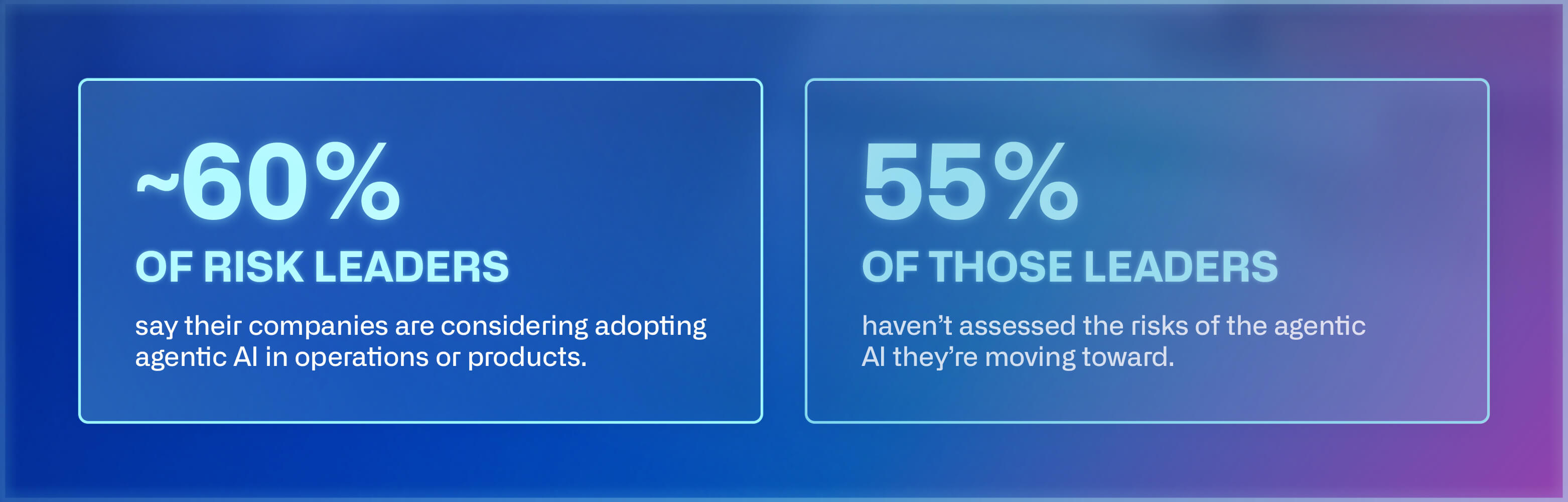
It's tempting to write that off as an edge case, but it isn't. Riskonnect's 2025 New Generation of Risk Report found that 60% of companies are considering agentic AI — but more than half haven't done any kind of risk assessment first. Enthusiasm is way ahead of governance here, and it shows up right where you'd expect: in the rush to deploy before anyone's mapped out what could go wrong, or how they'd even catch it.  

An AI agent running invoice processing isn't just reading data, it's suggesting how that data should be interpreted, coded, and acted on based on patterns pulled from your historical records. If those records are incomplete, out of date, or were inconsistent to begin with, the agent doesn't flag the problem, it just repeats it.  

Left unchecked, a small distortion early in that chain escalates. By the time an exception shows up three steps later, you're not looking at one error.  You're looking at a pattern the process built on its own — and no policy document or training session is going to catch it.

Explaining a decision isn't the same as controlling it  

Finance doesn't get graded on most decisions; it gets graded on the ones an auditor decides to pull. When that happens, "the AI model decided" is not an answer. A controller needs to point to a rule, a threshold, an approval path, and say here's why this happened — not because auditors are unreasonable, but because that's the actual job of an internal control environment.  

Modern AI tools are often genuinely good at explaining what they decided and why, after the fact. What they can't do is let finance sit down before go-live, define the rules, and know with certainty that those rules will be applied consistently to every invoice that follows.  

Explaining past behaviour and controlling future behaviour are two different things. In an audit, you need both — and most vendor pitches only offer the first. 

The cost shows up in exception handling, not extraction 

The metrics in those vendor pitches deserve the same scrutiny. Most vendors will sell you on extraction accuracy, but it's the wrong metric to anchor on because it's not where the pain shows up later. The one worth watching for specifically: the exception queue.  

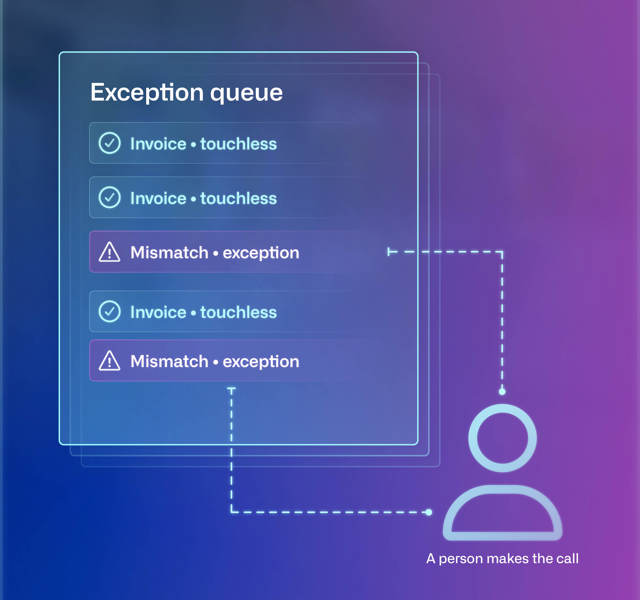
"Touchless processing" sounds great until you look at how many invoices still require manual intervention. AI doesn't eliminate exception handling — the review still happens and someone still has to make the call. Measuring only the simple invoices that go straight through doesn’t reflect the reality of invoice processing, like mismatches, amount variances, and approvals.  

The role of deterministic rules 

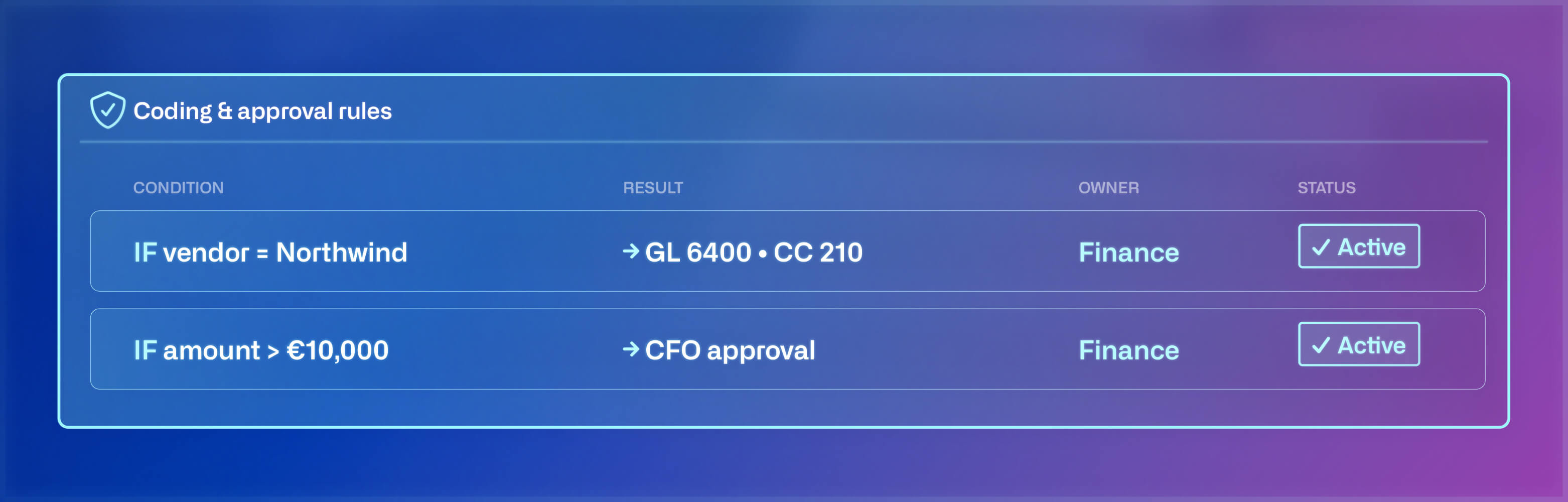
Deterministic rules require time to set up, so the instinct is to treat them as what AI came to replace. But in AP, they're what makes AI usable at all. A deterministic rule is a fixed instruction a person has already signed off on. When an invoice arrives, there's no interpretation — if this vendor, then this GL code; if this amount crosses that threshold, then this approval chain. 


That's the whole appeal: deterministic rules don't guess, which is exactly what makes AP automation trustworthy. They're testable, explainable, and repeatable. And that predictability is what an audit demands, which is why the most responsible use of AI in AP isn't to let it run unsupervised — it's to detect patterns, recommend improvements, and work alongside the rule-based logic the business owns and can stand behind.

So, what is AI good for?

Quite a lot, actually. And it's worth being specific about because the case for using AI in accounts payable is strong — especially when it's aimed at the right problems. In short, AI is good at the high-volume, messy work — reading documents, catching duplicates, spotting things that look off. Your team still makes the decisions. They just spend less time getting to them.

Data extraction

OCR has been reading invoices for years, but traditional capture depends on templates that someone has to set up and maintain for every vendor. AI, on the other hand, can easily pull details like vendor name, amount, and currency from thousands of differently formatted documents it has never seen before — faster and more reliably than a person.

A second set of eyes

It can spot a duplicate invoice that arrived through two different channels, flag an amount that's 40% above a vendor's usual range, or notice that a new invoice doesn't fit any established pattern at all. That kind of anomaly detection is something rule-based systems can't do, because you can't write a rule for a problem you haven't seen yet.

Better rules over time

If the AI notices that approvers keep rerouting a certain vendor's invoices to a different cost centre, the AI can flag that pattern to a person who decides whether the rule needs updating — instead of just adopting the new behaviour on its own.

What defensible AI governance looks like in AP  

That division of labour — handing the high-volume work to AI while keeping your team in charge of decisions — has to be set up deliberately. A defensible setup has four things in place, regardless of which vendor or model is behind it.


01

Finance owns the rules, not the AI agent 

The logic that governs how an invoice gets coded, what approval threshold applies, and how exceptions are handled should be defined by finance, not inferred by a model from historical data.  

Ask

Can finance define coding rules upfront, or does the system build them up over time from what it observes?

02

Every rule traces back to a person who owns it

If a vendor always gets coded to cost centre 400, that's a decision finance made and can point to. If a threshold changes, someone changed it, and there's a record of when and why.

Ask

Can you show who owns a given rule, and when it last changed?

03

The audit trail covers the rule, not just the outcome

A system that explains why it suggested something is useful. A system where finance defined what it would suggest — and that definition is on record — is what holds up under scrutiny.

Ask

Can finance see, in one place, every rule that will govern the next invoice before it arrives — or only explanations of past ones?

04

Human oversight needs a defined trigger

Saying 'a person reviews exceptions' isn't really a control if nobody can say which exceptions, who reviews them, or what they're checking against.

Ask

Which exceptions get reviewed, by whom, against what threshold — and is there proof it actually happens?

AP automation done right is audit-ready  

AI in accounts payable is a genuine step forward. It removes the manual effort of reading, extracting, and matching, and that's worth having. The question was never whether to use it. It's whether the rules that govern what happens next belong to your finance team or to a model trained on your historical data.  

The teams that get this right will be the ones where finance owned that logic from day one. That's not a less ambitious vision for AI in finance. It's the only version of it that withstands contact with an audit. 

Audit-ready AP starts with Continia Document Capture 

Built natively inside Microsoft Dynamics 365 Business Central, Document Capture reduces manual work from day one. AI-powered recognition reads and registers invoices in seconds, while configurable validations, approval workflows, matching logic, and posting controls ensure every document follows your company's policies.  

The result: AI where speed matters and business rules where certainty is required.  

Stay in control with Document Capture